
Ý kiến của ông Bằng Phong Đặng văn Âu về Phim "Terror in Little Saigon"sau khi đọc bài viết của Bùi M. Hùng.
Thưa anh Bùi M. Hùng,
Có
những nhà báo Việt Nam viết bài chỉ trích, cáo giác Mặt Trận Quốc Gia
Thống Nhất Giải Phóng Việt Nam (Mặt Trận) là Kháng Chiến Bịp, lừa đảo
đồng bào để làm tiền bỏ túi, đều bị giết chết. Thủ phạm không bị cơ quan
FBI khám phá, không khí sợ hãi lúc bấy giờ rất ngột ngạt. Mọi người
nghi ngờ sự khủng bố ấy là do bàn tay của Mặt Trận, nhưng không ai dám
nói ra.
Có
đoàn viên Mặt Trận đổ tội sự thanh toán tàn bạo dã man kia là do bàn
tay của Việt Cộng đứng trong bóng tối lợi dụng để đồng bào nghi ngờ Mặt
Trận nhúng tay vào tội ác. Đó là một lập luận của người mắc bệnh "down
syndrome" (bệnh phương trệ tinh thần) vì tính ấu trĩ.
Theo
tôi, đứng trước những cái chết của 5 nhà báo viết bài tố giác, Mặt Trận
đáng ra phải công khai mạnh mẽ lên án hành vi dã man của kẻ sát nhân và
phải treo giải thường bằng số tiền mặt thật lớn cho người nào tìm ra
thủ phạm để chứng tỏ mình không phải là thủ phạm. Trái lại, Mặt Trận đã
im lặng thì sự nghi ngờ của quần chúng càng tăng cao. Ai trồng khoai đất
này?!
Đáng
lý ra những nhà báo có tình liên đới nghề nghiệp cũng phải lên án bọn
sát nhân và phải làm đơn yêu cầu giới hữu trách Hoa Kỳ tìm cho ra thủ
phạm. Nhưng nhà báo tị nạn đã im lặng vì sợ hãi liên hệ bản thân. Tôi
đánh giá họ quá tầm thường, vì không có lương tâm chức nghiệp. Một hình
thức nào đó là đồng lõa với tội ác.
Nhận định về việc Đài Truyền hình PBS sẽ chiếu cuộc điều tra về vụ khủng bố ở Little Saigon của hai nhà báo Mỹ, anh Bùi M. Hùng viết: " (Theo tôi) đây là thêm một đòn thù, của những kẻ không ưa Cộng Đồng Người Việt Quốc Gia.." là không đúng.
Lương
tâm của nhà báo là phải đi tìm sự thật để đưa kẻ sát nhân ra ánh sáng;
chứ không phải một đòn thù nhắm vào Cộng Đồng Việt Nam.
Họ
vẫn đăng thư của Chiến hữu Chủ tịch HCM trên tờ báo Kháng Chiến từ quốc
nội gửi về thăm đồng bào quốc ngoại vào dịp Tết Nguyên Đán và các cháu
nhi đồng vào dịp Tết Trung Thu trong nhiều năm. Họ cũng đăng những tin
tức Mặt Trận triệt hạ nhiều đồn Công An Cộng Sản mà nếu tổng kết số đồn
Công An Cộng Sản bị Mặt Trận hạ thì "Quân Ta" đã tiến gần Saigon rồi!
Những cái lon dán CỜ VÀNG BA SỌC ĐỎ để kêu gọi đồng bào yểm trợ kháng
chiến đặt khắp các chợ VN, nhà hàng ăn VN trên toàn nước Mỹ. Những em bé
ngây thơ ở vào tuổi "teen" mặc đồng phục áo nâu, quần kaki mang báo
Kháng Chiến đi bán, nhiều người VN biết Kháng Chiến bịp bợm mà vẫn phải mua để tránh bị quấy nhiễu!
Cho đến khi Cộng sản mở cửa, sự đi lại của nhiều người Việt Nam từ trong nước ra và nhiều người Việt tị nạn về nước, Mặt Trận mới chấm dứt phao tin láo để đánh lừa đồng bào. Nhiều lần tôi đòi hỏi Mặt Trận (cha đẻ Đảng Việt Tân) ai là người giả danh Phó Đề đốc Hoàng Cơ Minh viết thư thăm đồng bào, họ đều im lặng. Cho nên, dù Việt Tân có nhiều thủ đoạn ma mảnh đến mấy thì đồng bào cũng không tin tưởng vì Việt Tân không dám trả lời SỰ THẬT!
Sự
lừa đảo trắng trợn đã lộ diện, lẽ ra Mặt Trận phải cuốn gói mà đi cho
khuất mắt. Những người thiện tâm trót đóng tiền cho Kháng Chiến bịp, đều
chấp nhận "thí cô hồn". Những người hăng hái Chống Cộng trót tham gia
Mặt Trận chắc chắn đau lắm, vì trót trao duyên nhầm tướng cướp.
Cái tài của Mặt Trận là không biết xấu hổ, lại đẻ ra Đảng Việt Tân, cho nên chính sự trong cộng đồng mới nhiễu nhương, phiền hà.
Tôi
thách thức Việt Tân dám cho biết ai là người giả danh Phó Đề Đốc Hoàng
Cơ Minh đã chết còn có thể viết thư từ quốc nội gửi ra hải ngoại.
Ai
là người phịa những thông tin Kháng Chiến Quân đánh sập và tiêu diệt
đồn Công An Cộng Sản trên TV, trên Đài Phát Thanh, trên Báo chí. Có phải người đó là chiến lược gia Nguyễn Xuân Nghĩa không?
Cái
tồi bại của báo chí Chống Cộng ở hải ngoại đều biết Phó Đề đốc HCM đã
chết qua thông tin của báo Thái Lan, là im lặng trước sự dối trá của Mặt
Trận. Tôi cho đó là sự hèn hạ của nền báo chí Việt Nam Tỵ Nạn ở
xứ sở Tự Do. Họ cam tâm đồng lõa với sự bịp bợm, dối trá của Mặt Trận. Cho
nên, các nhà báo, bình luận nổi tiếng như mấy ông Tiến sĩ có viết hàng
triệu bài viết chống Cộng thì kẻ thù chẳng xem có giá trị gì cả.
Tôi
đã viết nhiều bài báo tỏ ra khinh bỉ cộng sản vì chúng không biết xấu
hổ. Vậy người Chống Cộng phải biết xấu hổ mới làm cho kẻ thù kính nể
được. Nếu tất cả đều thi đua không biết xấu hổ thì QUỐC - CỘNG chống nhau là để tranh miếng cơm thôi, chứ chẳng phải vì lý tưởng tự do, dân chủ gì cả!
Tôi
hoan nghênh và biết ơn những nhà báo Hoa Kỳ bỏ công đì tìm SỰ THẬT để
trả lại CÔNG LÝ cho những nhà báo tố cáo sự lừa đảo mà bị giết.
Lẽ
ra nhà báo Việt Nam phải tham gia vào cuộc điều tra để làm sáng tỏ cái
CHÍNH NGHĨA vì sao ta đến đất nước này. Có phải vì khao khát tự do hay
vì giá áo túi cơm? Hãy trả lời tôi đi, các nhà truyền thông! Việt
Tân viết thư phản đối hai nhà báo đi tìm SỰ THẬT là biểu lộ sự hốt
hoảng, sự sợ hãi việc làm khuất tất của mình bị phơi bày ra ánh sáng. Nếu Việt Tân là cây ngay, thì đâu sợ chết đứng?
Tôi
chống Cộng không mệt mỏi cho đến hơi thở cuối cùng là vì LƯƠNG TRI của
con người có lòng tự trọng và có lòng yêu thương dân tộc mình. Tôi
cương quyết chống lại sự bịp bợm, dối trá, lừa đảo, lưu manh của bất cứ
ai thì sự Chống Cộng của tôi mới có ý nghĩa, cho dù bản thân bị sát
hại.
Sở
dĩ Việt Nam bị cộng sản thống trị cho tới ngày hôm nay, bởi vì người
dân Việt Nam không đủ sáng suốt, dũng cảm để chống lại điều sai trái.
Tôi viết thư này để khuyên anh Bùi M. Hùng đừng đánh đồng Mặt Trận hay Việt Tân, với cộng đồng Việt Nam tỵ nạn cộng sản. Nếu đánh đồng một duột như thế thì hóa ra CỘNG ĐỒNG VIỆT NAM TỴ NẠN CỘNG SẢN đều là một lũ đi lừa để kiếm cơm cả sao? Phải sáng suốt kẻo bị bọn xấu lạm dụng danh nghĩa, anh Bùi M. Hùng nhớ cho kỹ nhé.
Thằng Việt Cộng đã lừa chán chê rồi, anh Bùi M. Hùng chưa sáng mắt à? Sao lại để cho cái đảng thoát thai từ Mặt Trận lừa bịp tiếp tục lừa bịp?
Làm người phải có khí phách, có nhận thức điều phải, điều trái, điều
đúng, điều sai mới đáng sống anh Hùng ạ! Phải đặt CÔNG LÝ lên hàng đầu,
đừng để cho tình cảm riêng tư lấn át lý trí!
Thân chào tạm biệt anh,
Bằng Phong Đặng văn Âu
Tái bút: Nếu
những nhà báo bị bọn gian sát hại là người Mỹ chính cống (tức là không
phải người Mỹ ăn nhờ ở đậu như chúng ta) thì chắc chắn FBI đã bỏ công và
tiền bạc cố tìm cho ra thủ phạm rồi. Sự giết nhau trong cái đám Ghetto Việt Nam chẳng đáng cho họ quan tâm đâu.
Nếu tôi là nhà tỉ phú như ông Hoàng Kiều, tôi sẽ bỏ tiền ra thuê thám
tử tư vào cuộc thì chắc chắn thủ phạm sẽ bị đưa ra ánh sáng từ lâu rồi.
------
In
the 80’s, a number of Vietnam journalists were killed for writing
articles criticizing and denouncing The National United Front for the
Liberation of Vietnam (also called The Front/Mặt Trận) as a concocted
Resistance, scamming the community for money (1). The FBI did not
discovered who the culprits were, and the climate of fear was so
stifling at the time. Many people suspected that terrorism was at the
hands of the Front, but to date no one has dared to speak out. Members
of the Front blamed the savage and brutal assassinations on the
Vietnamese Communists who they claimed were taking cover in the highly
charged anti-communist atmosphere of the time, (conveniently helped fan a
campaign of reclaiming Vietnam passion by the Front) to redirect the
suspicion and lay their blame at the doorstep of the Front. It is an
argument smack of childish imagination and distortion.
In
my opinion, in the face of the murder of five journalists whose
articles denounced them, the Front should have publicly and resolutely
condemned the barbaric behavior of the murderers and should have
announced some large cash rewards for those who could help bring the
perpetrator(s) to justice, proving the Front was not the culprit. On the
contrary, the Front had kept their silence, which served to sow doubts
on people’s mind. Who else could have carried out such dastardly acts?!
On
the other hand, the other silent journalists - if they honor their
profession – they should have expressed their solidarity with their
murdered members by condemning the killers and petitioned the U.S.
authorities to find the perpetrators. But these refugee journalists were
silent because they were afraid of the risk of becoming tangled in the
web of murders themselves.
I
abhor their smallness, because by choosing to remain silent they had
been complicit with evil acts, showing no professional conscience.
Regarding
the PBS Television airing of the investigation into the terrorist
attack in Little Saigon by two American journalists, Bùi M. Hùng wrote,
"(I think) this is another revenge attack by those who dislike the
nationalist Vietnamese community…” I don’t believe this statement is
correct. The conscience of the journalists is to seek the truth in order
to bring the murderers to light; it is not a vengeful attack targeting
the Vietnamese community. I know Bui Manh Hung is not
a Việt-Tân (Vietnam Reform Party) member, but he fell in line with the
Vietnam Reform Party’s defensive propaganda line. He should remember
that the Front of Rear Admiral Hoang Co Minh does not represent the
Vietnamese nationalist community. The Front is a phony Resistance
organization aiming to make money illicitly. Because after Rear Admiral
Minh died on the Thai-Laos border and the image of Vice-Admiral Minh
lies dead in a pool of blood was published in Bangkok newspapers, the
Front had been trying continually to deceive people year after year.
Bear in mind that Hoang Co Minh’s return to Vietnam was a celebrated
public affair and surely the Vietnam Communist would be privy to. He led
an army of about several dozens people to fight the communists who has
under their disposal army of divisions strong. There were no military
strongholds in the country, no safe rearguard areas or bases where Hoàng
Cơ Minh and his band of ragtag army could be inserted and hideout
safely to make inroad into Vietnam to launch their guerrilla activities.
Unable to eat his crow, the Eastward movement led by Hoàng Cơ Minh
became but a suicidal mission, aiming to whitewash his crimes of false
pretense; it is not to be treated as an heroic act such that of Jing
Ke’s who tried to assassinate the Qin emperor. Yet the Front for years
had still tried to conceal information about Hoang Co Minh’s death.
The
Front continued to publish open letters, purportedly from
president-cum-commander Hoang Co Minh, printed on the Front’s Resistance
Newsletter, presumably sent to America from some secret outpost in the
Thai-Lao-Vietnam border during the Lunar New Years or during the
children’s Trung Thu/Mid-Autumn festivals for many years. They also
printed news of the Front’s victories, destroying many Public Security
strongholds, from the inflated sum of the Front’s numerous claims of
defeated Communist police stations, it would seem ‘our side’ would soon
enter Saigon! Tin cans pasted with the Three Stripe Yellow Flag were
placed in many VN markets and restaurants nationwide. The innocent
"teen" youngsters dressed in brown shirt and khakis pant uniforms
selling the Front’s Resistance newspapers would garner support from many
Vietnamese who know about the Resistance’s bluff and dissimulation, yet
they’d buy to avoid harassment!
Only
when the Communist Vietnam opened its door, and the movement of
Vietnamese in and out of Vietnam began, did the Front terminate their
lies to deceive the people. Many times, I’d demand the Front (forerunner
of the Vietnam Reform Party) to come clean with who was the person
impersonating Vice-Admiral Hoang Co Minh to write letters greeting the
people, they’d remain silent. So, no matter how great Viet Tan is with
many of its deceits and trickeries, many people would not trust them
because Viet Tan did never dare to reveal the truth!
After
the blatant fraud has been revealed, Viet Tan should have had the
decency to pack up and got out of sight. The good-will people who have
donated to the fake Resistance have accepted and cut their losses to the
"ghost factory." Perhaps those who have enthusiastically participated
deep in the anti-communist Front are certainly hurt, because they have
mistakenly slept with the enemy. The genius of the Front is its
shameless effrontery, they even gave birth to Viet-Tan (The Vietnam
Reform Party), that is why the community’s political situation is
deteriorating and problematic. The Front even dares to say people who
expose its shady affairs are aiding and abetting the communist! In
truth, the communists - more than anyone else - are completely aware of
the Front’s deceits and lies, because they have their intelligence and
spies. Their Embassies and Consulates monitored the overseas
Vietnamese very closely. The Vietnamese Communists got the Vietnam
Reform’s scams by the balls so the Vietnam Reform Party can only carry
out the Communist biddings! Saying this is a bit vulgar, but the loud
vociferous anti-Communist Viet-Tan is just like the saying of the old
folks: "The prostitutes is preaching morality!" or “the pot calling the
kettle black!” I dare Viet Tan to divulge the identity of the person who
impersonated Vice-Admiral Minh to write letters and sent them overseas
after his death.Who gave false information about the Resistance
army demolishing police stations and killing communists on TV, radio,
and in the newspapers? Is he not the strategist Nguyen Xuan Nghia?
What
is so low and distasteful about the overseas anti-Communist press is
that they had learned of Rear-Admiral Hoang Co Minh’s death through the
Thailand press, yet remained silent in the face of lies and false
pretention from the Front. I regard this as the abject low-down of the
Vietnamese refugee Press in a free nation. They have acquiesced to the
bluff, and become complicit in the Front’s deception. So famous
journalists and commentators - some armed with their Ph.D’s - even if
they could write millions anticommunist articles, their enemy would not
lose a wink of sleep or incur an ounce of worry, theirs is nothing worth
reading. I have written many articles expressing my scorn for the
communists because they do not know shame.
So
anti-communist people must learn to feel shame in order to earn respect
from their enemies. If people from both sides compete to emulate each
other’s shamelessness then Nationalists and Communists fighting each
other just to compete for some material gain and recognition, but
nothing about the cause of liberty, democracy! No matter who hate and
despise me for speaking the TRUTH, no one can look down on me, Mr. Hung,
sir!
I
welcome and appreciate the American journalists who seek the truth to
return justice to those journalists who’d denounced the fraud that got
them killed. Vietnam journalists should be involved in investigative
journalism to clarify the justness why we’ve come to this country. Is it
because of the desire for freedom or the desire to line one’s coat
pocket? Please answer me, Vietnamese media!
Viet
Tan writing letter object to the two reporters searching for TRUTH is
actually an expression of their nervousness, their fear of having their
dishonest acts exposed. If Viet Tan is an upright tree, then they
wouldn’t be afraid of dying standing up straight, would they?
I
will struggle against the communists until my last breath because of
the dictate of my conscience, because of human dignity and because of
love for my people. I stand resolutely against the bluff, deception,
fraud, dishonesty from any side, for only that would give my
anti-Communism new meaning, even if I myself would get murdered. The
reason Vietnam is still dominated by communists today is due to our
people’s inability to be keenly aware of right and wrong, being brave
enough to fight against injustice.
I am writing to advise you Mr. Bùi M.
Hùng not to equate the Vietnam Reform Party (Việt Tân or The Front)
with the Vietnamese communities seeking freedom from communist Vietnam.
If you equate the Vietnam overseas communities lock-stock-and-barrel
with the Front then it would seem that the Vietnam political refugees
who had been escaping en masse, their raison d’être in America was to
search for some monetary gain. Why would we let a Party reincarnated
from the Front continue to defraud us?
Human
beings must be courageous, they must be conscientious of what is right,
what is wrong; their existence on earth should be that of a life worth
living, Mr. Hung! JUSTICE must trump, do not let personal feelings
overwhelm reason!
I bid you good bye,
Bằng Phong - Đặng văn Âu
PS:
If the five murdered journalists were red-blood Caucasian Americans
(i.e. not just Americans seeking refuge and security in America like us)
then surely the FBI would have poured more money into the
investigation, trying everything in their formidable arsenal to rat out
the culprits long time ago.
The
killing of each other in the crowded Vietnamese Ghetto is not worthy
for them to care. If I were a billionaire like Hoang Kieu, I will spend
money to hire private detectives then certainly the perpetrators will be
brought to justice already.
Đính kèm bài viết của Bùi M. Hùng
On Mon, Nov 2, 2015 at 9:22 PM, BMH<
amsfv@aol.com> wrote:
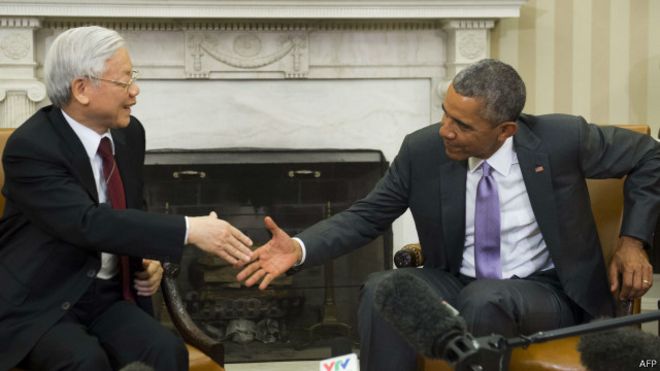
Tổng Bí thư Nguyễn Phú Trọng thăm Hoa Kỳ vào tháng 7/2015
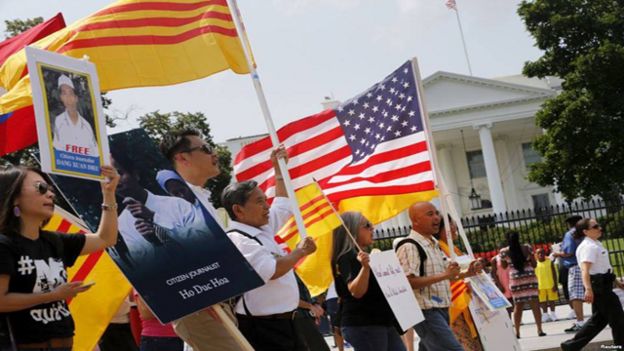
Đã có biểu tình trước Tòa Bạch Ốc khi Tổng thống Obama tiếp Tổng Bí thư Nguyễn Phú Trọng.
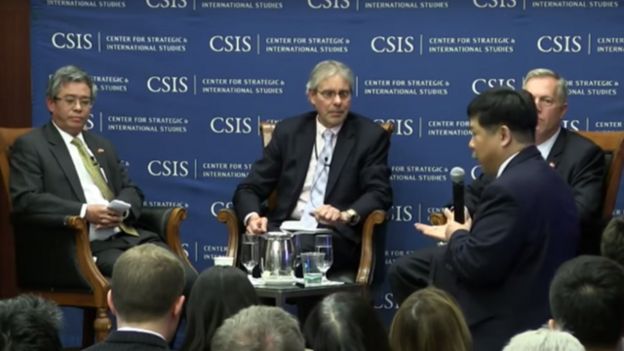
Ông Cù Huy Hà Vũ từng chất vấn Đại sứ Việt Nam tại Hoa Kỳ về nhân quyền tại viện CSIS.
Ông Rushford nói Chính phủ và Quốc Hội Hoa Kỳ đang ngả theo hướng cho phép Việt Nam mua vũ khí sát thương.
Thưa Quý Vị, Quý NT và CH...
Sau khi tôi gởi đến Quý Vị bản tin liên quan đến : Phim "Terror in Little Saigon"(Theo tôi) đây là thêm một đòn thù, của những kẻ không ưa Cộng Đồng Người Việt Quốc Gia..Sau đó tôi đã nhận được copy thơ lên tiếng phản đối từ Việt Tân - HTĐ gởi hai tổ chức thực hiện phim :"Terror In Little Saigon", cùng với bài viết hồi tháng 8 được đăng trên The Rushford Report của Greg Rushford "How Hanoi Buys Influence in Washngton DC" tạm dịch: Hà Nội “mua ảnh hưởng” ở Washington như thế nào?Xin mời Quý Vị theo dỏi để tường...và tùy nghi thẩm định...** Cám ơn Việt Tân đã nhanh chóng phản ứng và Anh Huỳnh Quốc Huy đã chuyển tài liệu đến tôi..
BMHWashington, D.C--------------
Hà Nội 'mua ảnh hưởng' ở Washington thế nào
BBC / 5 tháng 8 2015
Tổng Bí thư Nguyễn Phú Trọng thăm Hoa Kỳ vào tháng 7/2015
Chia sẻ Nhà báo Greg Rushford người Mỹ chuyên viết phóng sự điều tra
về chính trị trong mậu dịch quốc tế vào hôm 04/08 có bài đăng trên trang
rushfordreport.com của ông có tựa ' How Hanoi Buys Influence in Washington, D.C.' (Hà Nội mua ảnh hưởng ở Washington thế nào).
Bài
viết mô tả điều được cho là việc Đảng Cộng sản Việt Nam đã "âm thầm mua
ảnh hưởng" nhằm thúc đẩy nghị trình ngoại giao của Hà Nội ở Washington
và "chiến dịch vận động tinh vi" này dường như đã và đang có kết quả.
BBC
điểm lại nội dung chính của bài cùng quí vị. Bài viết mở đầu bằng việc
đề cập tới chuyến công du tới Việt Nam trong tuần này của Ngoại trưởng
Hoa Kỳ John Kerry với nghị trình chính được dự kiến là tăng cường quan
hệ kinh tế và an ninh quốc phòng.
Chuyến đi diễn ra sau gần đúng một tháng kể từ khi Tổng Bí thư Nguyễn Phú Trọng gặp Tổng thống Obama hồi tháng Bảy.
Nhà
báo Rushford mô tả về điều mà ông gọi là “chuyện thường gặp” trong chủ
đề nhân quyền vốn là cái gai lớn trong quan hệ Mỹ Việt.
Tác
giả nói ông hy vọng là vào tuần này Bộ Công an Việt Nam sẽ hành xử tốt
hơn hồi tháng Năm khi khi cố vấn hàng đầu về nhân quyền của ông Kerry là
ông Tom Malinowski thăm Hà Nội.
Chỉ
sau hai ngày ông Malinowski có các buổi làm việc “hữu ích” với giới
chức ở Hà Nội thì blogger Anh Chí (Nguyễn Chí Tuyến), một nhà bất đồng
chính kiến, đã bị người ta đánh đổ máu.
Sau
cuộc gặp với ông Obama ở Washington, ông Nguyễn Phú Trọng có bài diễn
văn tại một viện nghiên cứu có ảnh hưởng là Trung tâm Nghiên cứu Quốc tế
và Chiến lược (CSIS) nơi ông Trọng nói “Tôi khẳng định Việt Nam hết sức
coi trọng vấn đề quyền con người.”
“Bảo vệ và tăng cường quyền con người là mục tiêu chính của chính phủ Việt Nam," ông Trọng nói tại CSIS.
'Sự cố xấu xí'
Thế nhưng chỉ ngay trước khi ông Trọng đọc diễn văn thì đã có một sự cố mà tác giả mô tả là “xấu xí” xảy ra.
Sự cố này cho thấy những gì thực sự diễn ra khi giới chức Hoa Kỳ và Việt Nam khen Việt Nam có “tiến bộ nhân quyền rõ rệt”.
“Hơn
nữa, sự việc đáng hổ thẹn tại CSIS cho ta thấy một chỉ dấu về việc Đảng
Cộng sản đã âm thầm mua ảnh hưởng nhằm thúc đẩy nghị trình ngoại giao ở
Washington thế nào.
“Đây
là chiến dịch vận động tinh vi dường như có kết quả”, theo tác giả. “Hà
Nội dường như biết được rằng ở Washington, có tiền là được việc (money
talks).
Sự
cố mà tác giả mô tả là giới an ninh Việt Nam tác nghiệp ngay trên đất
Mỹ xảy ra khi một công dân Mỹ tới nghe ông Trọng nói tại CSIS đã bị đưa
ra ngoài tòa nhà mặc dù có tên trong danh sách khách mời tham dự.
Đã có biểu tình trước Tòa Bạch Ốc khi Tổng thống Obama tiếp Tổng Bí thư Nguyễn Phú Trọng.
Bác
sỹ Nguyễn Thể Bình đã từng tham dự nhiều sự kiện tại CSIS đã bị một
thành viên cao cấp của CSIS là ông Murray Hiebert, cùng với một nhân
viên an ninh của viện nghiên cứu này, yêu cầu rời tòa nhà.
Tác
giả Rushford cho biết nhân viên an ninh của phía Việt Nam không cho
phép bà Bình nghe bài diễn văn của ông Trọng và rằng khi bà đi lên phòng
để dự sự kiện này thì được thông báo rằng bà là diện không được tiếp
đón (Persona Non Grata).
"Ông
Hiebert nói với bà Bình rằng ông đã cố gắng giải thích với giới an ninh
Việt Nam thì vẫn chẳng có ích gì. Ông Hiebert đã xin lỗi bà Bình và
thừa nhận rằng việc CSIS chịu áp lực khiến phải hành động như vậy là
sai."
Theo
tác giả, ông Hiebert, người có thâm niên trong nghề báo và từng làm cho
Far Eastern Economic Review và The Wall Street Journal, đã nói thẳng về
vi phạm nhân quyền ở Thái Lan và Malaysia khi làm việc tại CSIS.
Tại
viện nghiên cứu này ông phụ trách nhiều blog viết chỉ trích thực trạng
nhân quyền tại Việt Nam mà tác giả là các nhà quan sát có tên tuổi.
“Tuy nhiên ông Hiebert dường như đã và đang cẩn trọng không để làm quá mất lòng nhà chức trách tại Hà Nội.
“Ông
là đồng tác giả của một nghiên cứu năm 2014 đề cập tới các vấn đề nhân
quyền tại Việt Nam một cách hơi nương tay, trong khi hoàn toàn không
được thẳng thắn về việc chính phủ Việt Nam trả tiền cho điều này,” tác
giả nhận định.
Nhà báo Rushford cho biết ông đã liên lạc với viện CSIS để cho họ có cơ hội giải thích sự cố xảy ra với bà Bình.
“Ông
Hiebert từ chối để phỏng vấn mặc dù đồng ý nhận câu hỏi qua email. Tuy
nhiên người phụ trách truyền thông của CSIS đã gửi cho tôi email nói
rằng ông đã khuyên ông Hiebert cắt đứt liên lạc.
“Câu
trả lời của ông Hiebert qua email không nói là những gì xảy ra với bà
Bình không phải là như vậy và ông đã giảm thiểu sự cố mặc dù nói rằng bà
Bình đáng ra phải được phép dự sự kiện này”.
Kẻ thù của Nhà nước
Theo
tác giả, ngoài thành công về mặt chuyên môn tại một Trung tâm Y khoa
Quân đội có tiếng tại Hoa Kỳ, bà Bình bị giới an ninh Việt Nam để mắt
tới vì các hoạt động riêng khác.
Bà
Bình, theo tác giả, làm việc về các chủ đề nhân quyền tại châu Á với
một số tổ chức có tiếng như Human Rights Watch và Amnesty International.
“Bà ra làm chứng trước Ủy ban Tự do Tôn giáo Quốc tế của Hoa Kỳ và tham gia nhiều buổi điều trần khác.
“Và
vào ngày 1 tháng Bảy, bà Bình cùng với các nhà hoạt động cho dân chủ và
nhân quyền Việt nam được mời vào Tòa Bạch Ốc nơi bà đưa ra các khuyến
nghị cho Hội đồng An ninh Quốc gia (NSC) về cách ông Obama bàn thảo chủ
đề nhân quyền với Tổng Bí thư Trọng như thế nào vào ngày 07/07 tại Phòng
Bầu dục.
“Cũng
có thể là trong khi hai nhà lãnh đạo đang họp ở Nhà Trắng thì bà Bình
có lẽ đã bị giới chức Việt Nam tại Đại lộ Pennsylvania và Công viên
Lafayette chụp hình khi bà cùng hàng trăm người Mỹ gốc Việt biểu tình ôn
hòa phản đối việc Việt Nam thiếu dân chủ.”
Tác
giả cho biết ông đã gửi thư tới Đại sứ Việt Nam tại Hoa Kỳ, ông Phạm
Quang Vinh, để tìm kiếm một lời xin lỗi về sự cố bà Bình bị đuổi khỏi
CSIS nhưng Đại sứ Vinh đã không trả lời.
'Không có tù nhân chính trị'
Ông Cù Huy Hà Vũ từng chất vấn Đại sứ Việt Nam tại Hoa Kỳ về nhân quyền tại viện CSIS.
Vào
ngày 24/03/2015, Đại sứ Vinh tham gia với tư cách khách mời bàn tròn
thảo luận tại CSIS do ông Hiebert chủ tọa. Ông Vinh tỏ ra bất bình khi
bị cựu tù nhân lương tâm Cù Huy Hà Vũ hỏi rằng bao giờ Việt Nam ngưng bỏ
tù những công dân mà tội của họ chỉ là chỉ trích Đảng Cộng sản.
Ông Vinh khó chịu và phản hồi rằng Việt Nam không có tù nhân chính trị và đã tránh nhìn vào mắt ông Vũ.
“Khẳng định rằng Việt Nam không có tù nhân chính trị giống như nói rằng ở Pháp không có pho-mát,” tác giả Rushford so sánh.
“Trong
khi không nằm trong danh sách khách mời tham dự buổi nói chuyện của
Tổng Bí thư Trọng tại CSIS, ông Vũ đã được mời tới Tòa Bạch Ốc vào ngày
01/07 nơi ông cùng bà Bình và những người khác trong đó có Angelina
Huỳnh và Hoàng Tứ Duy của Việt Tân, đảng phái mà Hà Nội gọi là một tổ
chức "khủng bố".
“Hãy
tưởng tượng xem giới chức tình báo Việt Nam nghĩ gì trong đầu khi họ
đọc thấy tin đưa về cuộc gặp ở Tòa Bạch Ốc vào hôm đó”.
“Vì
sao một nhà nghiên cứu chính trị của CSIS được nể trọng lại tránh các
câu hỏi trực tiếp liên quan tới thực trạng nhân quyền Việt Nam? Tác giả
hỏi trước khi tự trả lời rằng “sự nghi ngờ phát sinh là có cái gì đó
liên quan tới tiền bạc.”
“Hà
Nội đã và đang chi khoảng 30.000 USD mỗi tháng cho Podesta Group, một
công ty chuyên vận động hành lang có quyền lực với những quan hệ với các
chính khách Mỹ có tầm ảnh hưởng lớn.
Trang web của Podesta Group quảng cáo về khả năng của hãng giúp các khách hàng gây tranh cãi cải thiện uy tín.
“Chúng tôi mướn người từ các viện nghiên cứu thuộc phe tả cũng như hữu.
“David
Adams, người đã và đang làm việc về mảng Việt Nam cho Podesta Group,
từng là người phụ trách chính về các chủ đề lập pháp của bà Hillary
Clinton khi bà ngồi ghế ngoại trưởng.
“Đại
sứ Mỹ David Shear lúc đó còn ở Hà Nội. Ông Shear nay là một thứ trưởng
quốc phòng và là một trong những nhân vật giúp định hình các chính sách
quân sự của Hoa Kỳ ở châu Á, bao gồm cả việc phản hồi ra sao với việc
Việt Nam đề nghị Hoa Kỳ bán vũ khí sát thương để Hà Nội muốn răn đe sự
hăm dọa của Trung Quốc ở Biển Đông.
“Ông
Shear, khi còn là đại sứ Hoa Kỳ, thường xuyên nói với cộng động Mỹ gốc
Việt rằng trước khi Việt Nam được phép gia nhập TPP thì Hà Nội phải có
tiến bộ rõ rệt về nhân quyền. Ông chưa bao giờ giải thích cụ thể khái
niệm này có nghĩa là gì.
Cả Podesta Group và Đại sứ Vinh, theo tác giả, đều từ chối bình luận về việc Việt Nam đang đẩy mạnh nghị trình ngoại giao.
“Nhưng
chẳng cần tìm hiểu nhiều cũng thấy rõ là có ba ưu tiên: Hà Nội muốn Hoa
Kỳ bỏ cấm bán vũ khí. Việt Nam muốn thuyết phục Tổng thống Obama và
Quốc hội Hoa Kỳ rằng Hà Nội đã có dủ tiến bộ rõ rệt về nhân quyền để
tham gia TPP và họ đang vận động cho ông Obama tới thăm Việt Nam, hy
vọng là cuối năm 2015.
‘Có tiền là được việc’
Ông Rushford nói Chính phủ và Quốc Hội Hoa Kỳ đang ngả theo hướng cho phép Việt Nam mua vũ khí sát thương.
Trang
web của CSIS liệt kê các nhà tài trợ theo hạng mục chung. Họ tiết lộ
rằng chính phủ Việt Nam trả cho CSIS trong khoảng từ 50.000 USD tới
500.000 USD trong năm 2014. Nhưng trang này không cho biết khoản tiền đó
để dùng làm gì.
Ông
Hiebert là đồng tác giả một nghiên cứu năm 2014 của CSIS có tựa “Một Kỷ
nguyên Mới trong quan hệ Mỹ-Việt”. Vậy ai có thể đã trả tiền để làm
nghiên cứu này?
Người
đọc nghiên cứu không thể biết được điều đó ở mục lời cảm ơn. “Chúng tôi
ghi nhận sự hỗ trợ hào phóng và chu đáo và những góp ý của Đại Sứ quán
Việt Nam tại Washington, D.C., Đại sứ quán Hoa Kỳ tại Hà Nội, và Lãnh sự
quán Hoa Kỳ tại Thành phố Hồ Chí Minh.” Nhưng cụ thể là ai đã trả tiền?
“Ông
Hiebert — sau khi tôi hỏi tới hai lần — đã thú nhận rằng chính phủ Việt
Nam trả tiền cho nghiên cứu này. Ông nói rằng không có việc chính phủ
Hoa Kỳ cấp vốn cho nghiên cứu đó,” tác giả viết.
Theo
nhà báo Rushford, trong nghiên cứu “Một Kỷ nguyên Mới trong quan hệ Mỹ -
Việt”, ông Hiebert đã chỉ trích các nhà đấu tranh dân chủ nhân quyền
trong quốc hội Mỹ là nhóm người lúc nào cũng chỉ trích và chẳng hiệu
quả.
“Ông
Hiebert cũng đã chỉ trích nhiều người Mỹ gốc Việt cổ súy cho dân chủ
không hiểu được tình hình thực tế của Việt Nam ngày nay.
“Thế nhưng khi nói tới thực trạng nhân quyền của Việt Nam thì ông Hiebert dường như lại thủ thế.
“Nghiên
cứu không đề cập tới việc Hà Nội không tuân thủ Công ước Quốc tề về
Quyền Dân sự và Chính trị mà Việt Nam tham gia. Không đề cập tới các
điều luật trong bộ luật hình sự của Việt Nam hình sự hóa tự do ngôn
luận, tự do hội họp và chỉ trích Đảng Cộng sản.
“Thay
vì đề nghị rằng Việt Nam có thể giúp cải thiện uy tín bằng việc hiện
đại hóa bộ luật hình sự yếu kém, ông Hiebert chỉ đơn thuần khuyến nghị
chính phủ Hoa Kỳ và Bộ Công an Việt Nam nên họp bàn thêm.
“Ông Hiebert kịch liệt bác bỏ rằng ông nhẹ lời bởi ai đã trả tiền cho nghiên cứu này,” nhà báo Rushford viết.
Theo
nhà báo Mỹ, "Nghị trình vận động hậu trường của Hà Nội đang có kết quả.
Chính phủ và Quốc Hội Hoa Kỳ đang ngả theo hướng cho phép Việt Nam mua
vũ khí sát thương.
Có
ít việc bàn thảo về “tiến bộ rõ rệt” về nhân quyền bao gồm tự do ngôn
luận, tự do hội họp và tự do tôn giáo trong các vòng đàm phán TPP và
Tổng thống Obama nói ông muốn nhận lời mời tới thăm Hà Nội mặc dù chưa
lên lịch thăm khi nào.
“Ông
Hiebert nói trong email trao đổi với tôi rằng ông đã khuyến nghị rằng
khi nào ông Obama bay sang Việt Nam, ông sẽ nói mạnh hơn về nhân quyền.
“Một
người hoài nghi có thể quan sát những gì mà Trợ lý Ngoại trưởng Tom
Malinowski, Ngoại trưởng John Kerry, và rất nhiều các quan chức khác của
Mỹ đã từng làm – quá nhiều lần và chẳng thay đổi được bao nhiêu”, tác
giả kết luận.
Nhà báo Greg Rushford từng viết cho các tạp chí The Wall Street Journal và The Diplomat. Ông đã từng có bài nhận định về quan hệ Việt Mỹ trong chuyến thăm Hoa Kỳ của Chủ tịch Trương Tấn Sang.
--------
How Hanoi Buys Influence in Washington, D.C.
posted by Greg Rushford on August 4, 2015
http://rushfordreport.com/?p=391
U.S.
Secretary of State John Kerry arrives in Hanoi this Thursday for a
two-day visit. Expect much talk of how the United States and Vietnam
have been developing closer security and economic ties — and how
Vietnam’s praiseworthy “progress” in improving its human-rights record
is making this possible. Hopefully, Vietnam’s feared Ministry of Public
Security will be on better behavior this week than back in May. Then,
Kerry’s top human-rights advisor, Tom Malinowski, held what he
characterized as “productive” meetings in Hanoi with senior Vietnamese
officials. On May 11, two days after Malinowski’s visit, thugs wielding
metal pipes bloodied a courageous Vietnamese political dissident named
Anh Chi. Malinowski deplored the incident, while still insisting that
Vietnam has been making commendable “progress” on human rights.
Kerry’s
Aug. 6-8 trip comes on the heels of a successful visit to Washington
last month by Nguyen Phu Trong, the general secretary of the Communist
Party. Trong had a “productive” meeting with President Barack Obama in
the Oval Office on July 7, after which the two leaders issued a joint
“vision” statement that said each country recognized the importance of
protecting human rights. The next day, Trong made a major speech at an
influential U.S. think tank, the Center for Strategic and International
Studies (better known by its acronym, CSIS). “Protecting and promoting human rights is the main objective of our development,” Trong declared. “We want to ensure, promote and protect the rights of all people in Vietnam.”
Well,
maybe not all. Once again, a familiar pattern emerged: Shortly before
Trong’s speech before a CSIS audience of mainly well-connected
Washington insiders, there was another ugly incident behind the scenes.
The incident illustrates what’s really going on when American and
Vietnamese officials praise Vietnam’s “demonstrable” human-rights
progress. Moreover, the CSIS embarrassment offers a glimpse into how the
Communist
Party has been quietly buying influence to advance its foreign policy
agenda in Washington — a sophisticated lobby campaign that appears to be
working. Hanoi, it appears, has learned that in Washington, money
talks.
But
that’s getting ahead of this story, which begins with Trong’s July 8
historic speech — the first-ever such appearance for a senior Communist
Party leader — at CSIS’ gleaming modern headquarters a few blocks from
the White House. As the secretary general was preparing to speak about
his deep interest in protecting human rights, Vietnamese security
officials were quietly demonstrating otherwise, even on American soil.
It seems that
Hanoi’s intelligence operatives had a file on one of the invited CSIS guests — like Anh Chi, another enemy of the state.
Persona Non Grata
When
Dr. Binh T. Nguyen, a prominent Vietnamese-born physician (and an
American citizen) showed up to hear the secretary general’s speech, she
was informed that she was persona non grata. Binh, an invited guest,
cleared CSIS security at the entrance, as she had on several previous
occasions. But when she went upstairs to join the audience, a CSIS
senior fellow was waiting. Murray Hiebert, accompanied by a CSIS
security guard, insisted that Binh leave the premises. An obviously
uncomfortable Hiebert explained that he was so sorry, but the communist security operatives simply would not permit Binh to hear Trong’s speech. The apologetic
Hiebert told Dr. Binh that he had tried his best to reason with the
Vietnamese security officials, but to no avail. They were not interested
in negotiating, and were adamant that Binh would not be allowed to hear
Trong’s speech, Hiebert related.
Hiebert
apologized sincerely to Binh, admitting that it was wrong for CSIS to
have given into the pressure. Ejecting her had ruined the event for him,
Hiebert told the doctor. I spoke with Binh twice, for nearly an hour,
going over the facts carefully, in great detail. Subsequently I was able
to substantiate that the doctor’s account was the same as how Hiebert
explained the incident to one of his colleagues at CSIS, Benjamin
Contreras, the program director for CSIS’ Southeast Studies section.
Dr.
Binh told me that Hiebert was characteristically polite. Still, it was
intimidating that he had a guard with him to make sure she left the
premises, the doctor added. Binh said she does not seek publicity, and
looked forward to being invited to future CSIS events. She asked not to
be quoted directly in this article.
The
Canadian-born Hiebert, 66, is a soft-spoken former journalist with the
Far Eastern Economic Review and the Wall Street Journal. He is perhaps
the last person one would expect would get caught up in a dubious
human-rights episode. In 1999, Hiebert, then the Review’s Kuala Lumpur
bureau chief, was jailed for writing an article that raised disturbing
questions about the integrity of Malaysian courts. Even though his
report was accurate, Hiebert was convicted of “scandalizing” the
judiciary, and spent a month in a Malaysian jail.
At
CSIS, Hiebert has spoken out against human rights practices in Thailand
and Malaysia. Hiebert notes that he approved several recent blogs
written for CSIS by respected Vietnam watchers that have been critical
of Vietnamese human-rights practices, including curbs on the media. But at the same time, Hiebert seems to have become careful not to cause too much offense to authorities in Hanoi. He co-authored a 2014 study,
for example, that treated Vietnam’s human-rights practices rather
gently, while not being entirely forthcoming about the fact that the Vietnamese government had paid for it (more on that later in this article).
CSIS Gives Its Side of the Story
Hiebert
declined to be interviewed, but he did answer some (but far from all)
questions that were submitted in writing — until a CSIS public-relations
spokesman sent me an e-mail saying that he had advised Hiebert to cut
off the communications.
Hiebert’s
written responses did not directly dispute Dr. Binh’s account about
what happened. But he attempted to minimize the incident, not mentioning
the main human-rights point: how he had been pressured by the
Vietnamese security officials to escort Binh from the building, and that
did so, knowing that it was wrong for CSIS to give into such pressure.
The
CSIS spokesman, H. Andrew Schwartz, first claimed that “Murray’s side
of the story is quite different from what you have recounted.” But
Schwartz had no further response after being informed that Dr. Binh’s
account was, word-for-word, the same as Hiebert had related to his CSIS
colleague, Benjamin Contreras. (Schwartz was formerly a spokesman for
the American Israel Public Affairs Committee, known for its hard-nosed
dealings with inquiring reporters. Before that, Schwartz was a producer
for Fox News.)
While acknowledging that Dr. Binh had indeed been an invited guest, Hiebert seemed to brush off the incident as a sort-of bureaucratic snafu. “No one makes decisions about who attends events at CSIS but
CSIS,” Hiebert wrote. “Dr. Binh was not on the initial RSVP list…CSIS made a mistake by allowing her to
RSVP late to the event when the registration process had already been closed.” But Binh should have been allowed to attend, Hiebert agreed.
Enemies of the State
A
public-record search shows why the Communist Party would have a file on
Binh. She is chief of the thoracic radiology section at the Walter Reed
Army Medical Center, and has received awards for her professional
accomplishments. Being affiliated with one of the most respected medical
institutions in the world, of course, wouldn’t send up any red flags in
Hanoi. But what Binh does away from the office definitely would.
On
her private time, Binh has worked on human rights issues in Asia with
high-profile organizations including Human Rights Watch and Amnesty
International. She has testified before the United States Commission on International Religious Freedom, among other respected panels. She serves on the Virginia
Asian
Advisory Board, which advises the governor “on ways to improve economic
and cultural links between the Commonwealth and Asian nations, with a
focus on the areas of commerce and trade.” And on July 1, Binh joined
several other respected human-rights champions who were invited to the
White House. There, Binh and her colleagues
gave advice to the National Security Council on how President Obama
might want to handle human rights when Secretary General Trong came to
the Oval Office on July 7.
Also, during the Obama-Trong White House meeting, Binh may well have been photographed by communist
officials across Pennsylvania Avenue in Lafayette Park, where she
joined several hundred Vietnamese-Americans who peaceably protested
Vietnam’s lack of democracy.
Vietnam’s
ambassador to the United States, Pham Quang Vinh, did not respond to an
e-mail asking if he would care to join Hiebert by apologizing to Dr.
Binh. It didn’t take much digging to understand why. On May 24, Amb.
Vinh had appeared on a CSIS panel moderated by Hiebert. Vinh was visibly
upset when he was questioned by a former political prisoner, Cu Huy Ha
Vu. Ha Vu made a short statement criticizing Vietnam’s human rights
record, asking when Vietnam would stop its practice of incarcerating
citizens whose only crimes were to criticize the Communist Party. The
angry diplomat retorted that Vietnam has no political prisoners —
avoiding eye contact with Vu. (Asserting that Vietnam has no political
prisoners is like claiming that there is no cheese in Paris.)
Vu told me that he was not invited to the July 8 CSIS event with General Secretary Trong. Hiebert declined
to explain, but it’s easy to surmise that the Communist Party chief had
made it clear he would brook no awkward questions.
Vu
is no ordinary political prisoner. He is one of Vietnam’s most
prominent pro-democracy advocates today — especially because of his
family’s elite revolutionary background. Vu’s father, the poet Cu Huy
Can, was close to Ho Chi Minh during the Vietnam War, and served in
Vietnam’s first national assembly. The well-educated Vu also earned his
doctorate in law from the University of Paris.
Vu
became an enemy of the state when he started challenging senior
Communist Party officials for their lack of accountability. He even
filed lawsuits against Prime Minister Nguyen Tan Dung on several
occasions in 2009 and 2010, charging Dung with complicity in abuses of
the environment, and for banning Vietnamese citizens from pressing
complaints against the national government. Vu was imprisoned after
being convicted in a 2011 show trial. His “crimes” included criticizing
the Communist Party in interviews with the Voice of America and
Radio Free Asia.
Vu
was released from prison last year, and exiled to the United States,
where he continues to advocate peaceably for the Communist Party to
enact democratic reforms. While he was not on the invitation list to
hear
Secretary
General Trong proclaim his deep interest in protecting human rights at
CSIS’s July 8 event, Vu has been welcomed at the White House. On July 1,
Vu joined Dr. Binh and several other pro-democracy advocates who were
invited to brief the National Security Council ahead of Trong’s visit.
Imagine what Vietnamese intelligence officers thought, if they spotted
press accounts of that White House meeting. Also present in the White
House that day were two U.S.-based leaders of the Viet Tan, Angelina
Huynh and Hoang Tu Duy. Viet Tan — shorthand for the Vietnam Reform
Party — is particularly feared in Hanoi because of its skills in using
social media to reach its followers inside Vietnam. The organization is
also known for its peaceable advocacy of democracy for Vietnam. The
Communist Party considers the Viet Tan to be a “terrorist” organization.
The Vietnamese government has admitted that it has imprisoned citizen
journalist/bloggers for the “crime” of being associated with the group.
A Lobby Plan Comes Together
While the U.S. government respects the Viet Tan’s legitimacy, Hiebert ducked the issue. Asked repeatedly whether he agreed with Hanoi that the Viet Tan is a terrorist group, Hiebert did not respond. That’s about
when CSIS spokesman Andrew Schwartz cut off the communications,
asserting that “Hiebert has answered all of your questions.”
Why
would a respected CSIS political analyst avoid direct questions
concerning Vietnam’s human rights record? The suspicion arises that it
has something to do with money. Hanoi has been paying $30,000-a-month
to the Podesta Group, a high-powered lobby firm with close ties to
major U.S. political figures. David Adams, who has been working on
Vietnam’s behalf for the Podesta Group, was Hillary Clinton’s chief of
legislative affairs when she served as President Obama’s first secretary
of state. Adams would be valuable to Hanoi
because he has an insider’s knowledge to sell: he knows firsthand how
U.S. officials at the State Department and the Pentagon tend to think
about Vietnamese issues. For instance, when
Adams
was with Clinton on Foggy Bottom, David Shear was the U.S. ambassador
to Hanoi. Shear is now an assistant secretary of Defense, where he is
helping shape U.S. military policies regarding Asia — including the
issue of how to respond to Vietnam’s request for U.S. sales of lethal
weapons that Hanoi wants to help fend off
Chinese
intimidation in the South China Sea. (Shear, when he was the U.S.
ambassador, routinely assured Vietnamese-American audiences that before
Vietnam would be allowed to join the Trans-Pacific Partnership trade
deal, Hanoi must make “demonstrable progress” on human rights. He never
explained what that might mean.
The
Podesta Group and Amb. Vinh declined comment on the Vietnamese foreign
policy agenda they have been advancing. But it doesn’t take much digging
to discover the three top priorities: Hanoi wants the
U.S. arms embargo lifted. The Vietnamese also want to convince Obama and
Congress that they have indeed been making enough “demonstrable
progress” on human rights to join the Trans-Pacific Partnership trade
deal. And they have been lobbying for Obama to visit Vietnam, hopefully by the end of 2015.
Is
it a coincidence that Hanoi’s agenda is generally shared by CSIS? The
Podesta Group’s website boasts of its ability to help controversial
clients boost their credibility. “We recruit allies from left-and
right-leaning think tanks…to validate our clients’ messages and build an
echo chamber of support,” Podesta boasts. It’s far from an unusual
practice in today’s Washington lobbying scene.
Hiebert
insists that he is unaware that the Podesta Group has been lobbying for
the Vietnamese government. But Hiebert knew enough to invite someone
from the Podesta Group to hear Trong speak on July 8; he says that CSIS does not disclose its invitation list.
(Hidden) Money Talks
Nor
is CSIS completely transparent about where it gets its financing. CSIS
is one of 150-plus think tanks around the world that are rated by an
impressive non-profit named Transpacific on their willingness to
disclose — or not — where they get their money. The well-regarded
Transparify, based in Tibilisi, Georgia, is part of the Open Society
Foundations that were founded by George Soros. In 2014, Transparify gave CSIS poor marks, awarding it One Star, near the opaque bottom of a Five-Star transparency scale. This year, CSIS earned Three Stars from Transparify — neither fully opaque nor transparent, but at least moving in the right direction.
The CSIS website now lists donors on a general range. It discloses that the Vietnamese government gave CSIS somewhere between $50,000 and $500,000 in 2014. But the site does not disclose what the money was intended for.
Hiebert
co-authored a major 2014 CSIS study of U.S.-Vietnamese relations: “A
New Era in U.S.-Vietnam Relations. So who might have paid for that?
Readers couldn’t tell from the study’s acknowledgments. “We would
like to acknowledge the thoughtful and generous support and counsel
received from the Embassy of the Socialist Republic of Vietnam in
Washington, D.C., the U.S. Embassy in Hanoi, and the
U.S. Consulate in Ho Chi Minh City.” But who, exactly, paid for it?
Hiebert — after being asked twice — confessed that the Vietnamese government paid for the study. He said that there was no U.S. government funding for that study.
CSIS
spokesman Andrew Schwartz insisted that it is “mean-spirited” to
suggest that anyone who read the acknowledgment would not have known
that it was “clearly” the Vietnamese who paid for A New Era. “[I]f you
decide to write that CSIS didn’t acknowledge the support of the
government of Vietnam, you will be in error,”
Schwartz declared. CSIS always discloses the sources of funding for its studies, the CSIS media analyst declared.
Mostly
always, might be more apt. A recent CSIS study focusing on human rights
in countries like Russia, Venezuela and Ethiopia was forthright about
where the money came from: “This report is made possible by the generous
support of the Oak Foundation” it discloses. And still another CSIS
study on U.S.-Japan relations discloses that the money came from Japan’s
Sasakawa Peace Foundation. The contrast with the misleading acknowledgment to Hiebert’s New Era study is about as clear as it gets.
In that study Hiebert criticizes U.S. congressional human-rights champions for being an ineffectual name-and-shame crowd. He further criticized many Vietnamese-American pro-democracy advocates
for being out of touch with realities in today’s Vietnam. But when it
came to Vietnam’s human-rights record, Hiebert seemed to pull his
punches. There is no mention of Hanoi’s non-compliance with the International Covenant on
Civil and Political Rights, which Vietnam is a signatory to. There is no mention of the provisions of
Vietnam’s penal code that criminalize free speech and assembly — and criticizing the Communist Party. Instead, the study basically acknowledges the obvious: that human rights is the most difficult issue between
the U.S. and Vietnamese governments. Instead of suggesting that Vietnam
could help improve its credibility by modernizing its offensive penal
code, Hiebert merely recommended more meetings between the
U.S. government and Vietnam’s Ministry of Public Security.
Hiebert vehemently denied that he softened his tone because of who paid for that study. Meanwhile,
Hanoi’s lobby agenda seems to be working. The U.S. government and Congress are leaning toward allowing
Vietnam
to purchase the lethal arms it seeks. There is little talk in the
Trans-Pacific Partnership trade deal about Vietnam’s first making
“demonstrable progress” on the core human-rights issues involving the
freedoms of speech, assembly, religion — and the offending provisions of
the penal code that mock the international rights covenants that Hanoi
has signed. (The precise details of the TPP deal, which has not been
finalized, remain classified.)
President
Obama has said he would like to accept Secretary General Trong’s
invitation to visit Vietnam, although the president has not yet set a
date. Hiebert pointed out in our exchange of e-mails that he has
recommended that when Obama does fly to Vietnam, he speak forcefully on
human rights. A skeptic might observe that this is what Assistant
Secretary of State Tom Malinowski, Secretary John Kerry, and so many
other U.S. officials have done — so many times, over so many years, to
such little avail.
Ngo Dinh Diem Fondation
tinhthan_ngodinhdiem @yahoogroups.com |

0 comments:
Post a Comment